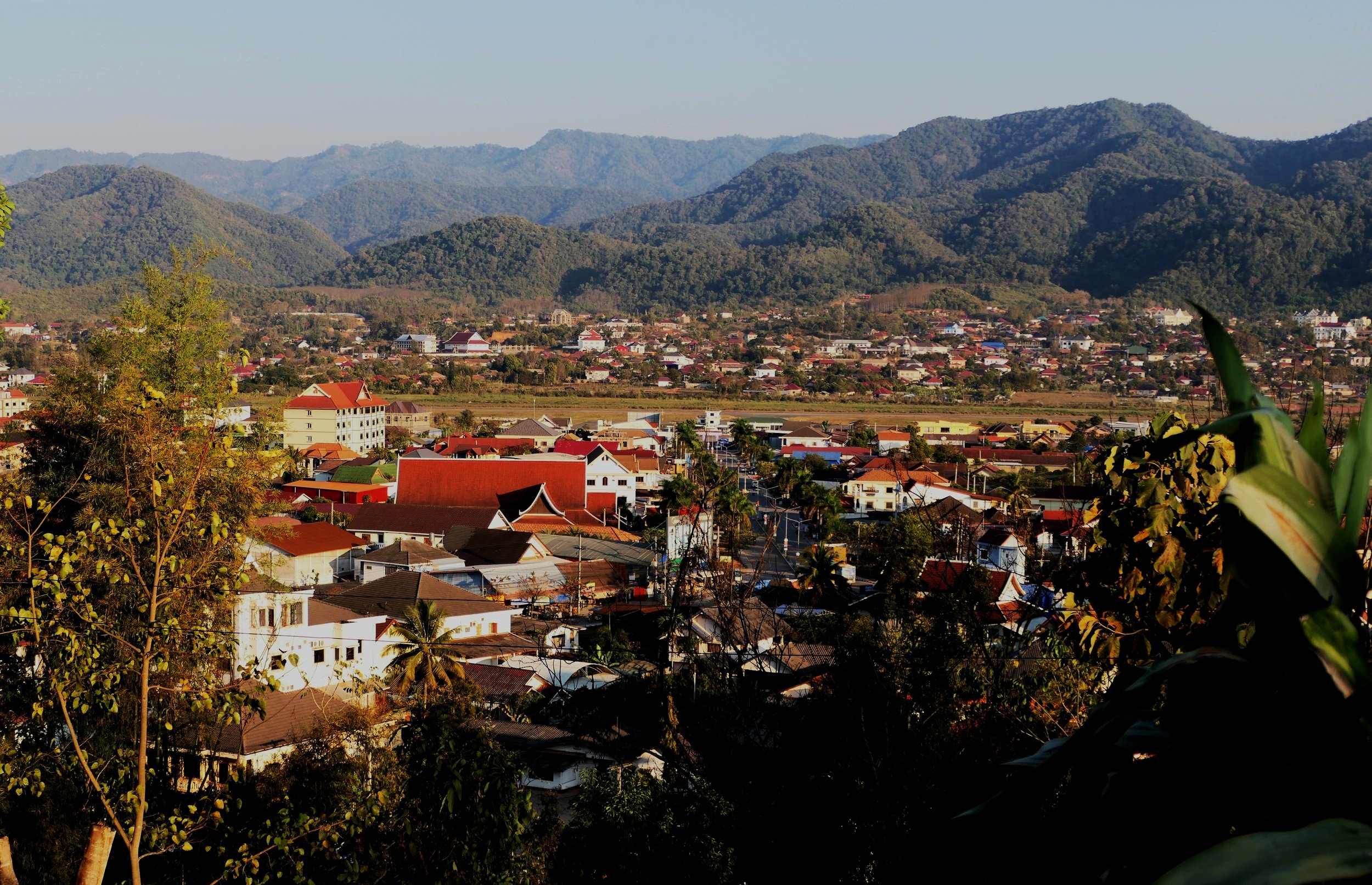
Muang Xay / Oudomxay: a transport and trekking hub with two names
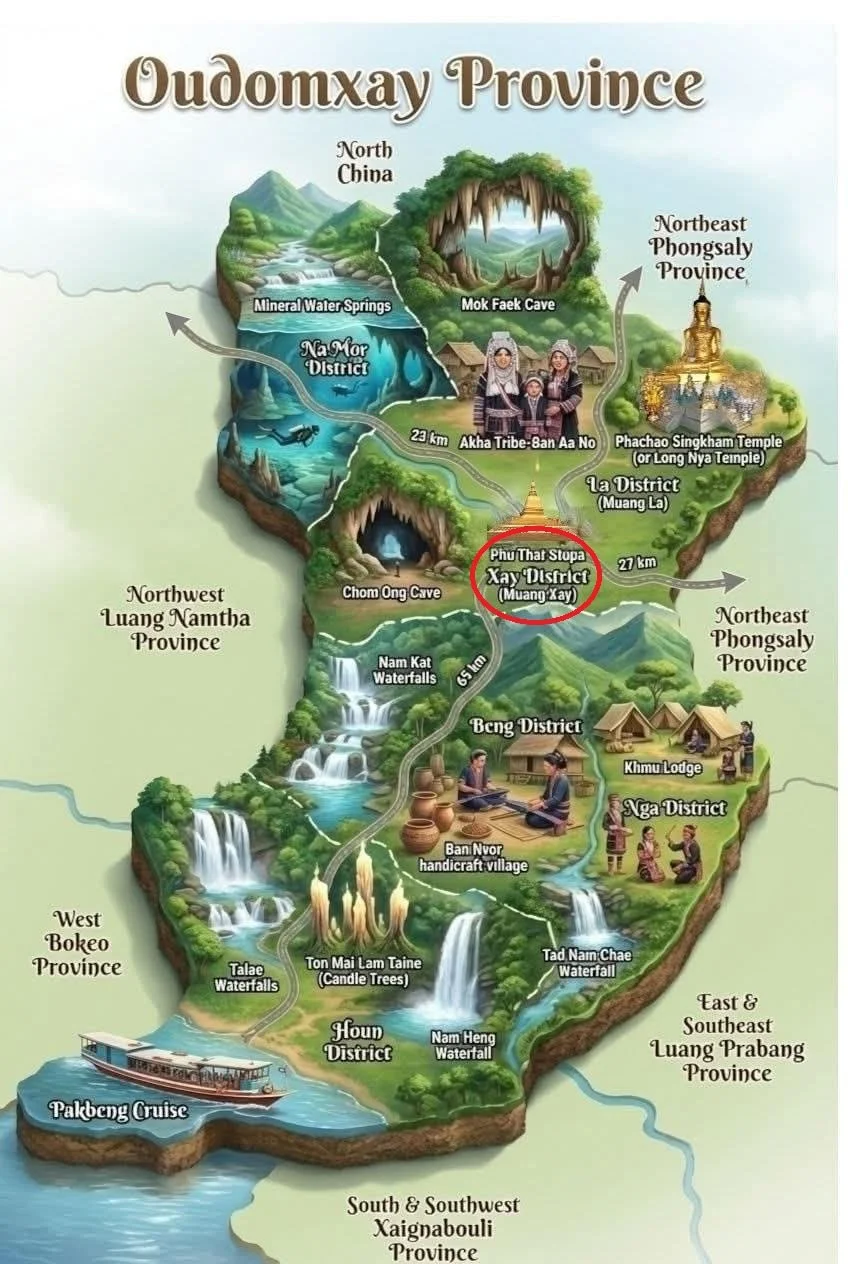
3-D representation of Oudomxay province provided by Drasmy SVsone.
“Oudomxay” is the province and “Muang Xay” is the province’s capital city, but many people use the two names interchangeably. If you get confused, just remember that “Muang” means “town” or “district” in Lao, as in Muang Ngoi, Muang Khua, etc.
Muang Xay is a major rail and bus transport hub. Luang Prabang is one hour to the south by train, and Nateuy is one hour to the north, where you can catch fast buses to both Luang Namtha (for fantastic jungle trekking) and Huay Xay, home of the utterly wonderful Gibbon Experience and gateway to Northern Thailand. Heading south from Muang Xay, buses travel highway 2W (a relatively good road) to the town of Pakbeng, the halfway point on the 2-day Mekong Slow Boat between Luang Prabang and Huay Xay. To the southeast, Nong Khiaw is just 115 km away from here, but it takes 4 hours by bus on a terrible road. Heading north, a pretty good road (highway 2E) takes you to the Pak Nam Noy junction, where buses either turn east toward Muang Khua and Vietnam or continue northward to the remote trekking hubs of Muang BounTai and Phongsaly in Phongsaly Province.
I spent half a day in Muang Xai, and I particularly enjoyed the sunset view from the Phu That pagoda and monastery (see photo), as well as the excellent Red Cross Sauna and Massage Center just a few minutes’ walk away (no English spoken, very inexpensive).

Restaurant options are limited. A charming elderly woman serves fabulous food at Souphalin Restaurant in her private home. Service is extremely slow – I think she waits until she has a customer, takes their order, and then sends someone out to buy the ingredients. I’m not joking. With so few tourists in the more remote areas of Laos, that happens sometimes.
If you are going from Oudomxay into Vietnam, and you have a Vietnamese e-visa, you should print out your e-visa BEFORE arriving at the border. Sometimes just having it on your phone is good enough, sometimes not. I am told there is a shop that will print for 5,000 kip (about $0.30) per page — it is on the main street a short walk (maybe 100 metres or so) south of the river. I’m afraid I don’t have more precise directions than that.
Trekking out of Muang Xay
The government’s Tourist Information Centre is located on the main street very close to the river. Their impressive English-speaking guides offer several treks amongst the hill tribes that looked interesting. I didn’t trek here, because I had just done it in Luang Namtha. If you are interested, I also recommend you stop in at the tourist Information office, and also contact Khamhak Suvannaphoum at https://www.heartoflaotravel.com/, tel +856 20 56 836 297. I have never used this agency, but their tours look interesting and I will give them a try the next time I visit. I could see from the hilltop overlooks that some jungle here looks beautiful and intact, but a lot of jungle is completely destroyed. The quality of the trekking will depend in part on whether you hike through intact jungle or not. Be sure to ask detailed questions about that before paying for a hike.